The international momentum toward grid decarbonization, compounded by rising geopolitical volatility and electricity pricing surges, has propelled the adoption of Battery Energy Storage Systems (BESS) beyond conventional limits. What was once a niche microgrid application has developed into a core pillars of both residential and commercial grid-independence strategies. Geographically, North America, the European Union, and the Asia-Pacific region are seeing massive infrastructure upgrades, mandating reliable, safe, and highly integrated home energy systems.
For commercial, industrial, and residential sectors alike, energy storage represents more than just backup power; it is an intelligent asset for dynamic load management. Today's commercial consumers deploy BESS to avoid peak demand tariffs, optimize local photovoltaic (PV) generation, and stabilize weak local distribution networks. By shifting energy consumption profiles from peak utility windows to solar-abundant periods, businesses and private residences reduce operating overheads and carbon footprints. As energy distribution systems transition from centralized architectures to virtual power plants (VPPs), the capacity to store and dynamically dispatch power has become critical.
"Market intelligence suggests the global residential energy storage capacity is projected to maintain a compound annual growth rate (CAGR) exceeding 22.5% through 2032, requiring manufacturers to maintain stringent manufacturing compliance alongside highly optimized supply chains."
In the European Economic Area (EEA) and global markets that base their regulatory frameworks on European standards, the CE (Conformité Européenne) marking is not merely a label—it is a comprehensive declaration of safety, performance, and legal compliance. For home energy storage systems, which interface directly with high-voltage photovoltaic systems and residential electrical grids, strict safety metrics are non-negotiable.
CE certification certifies that a lithium battery pack complies with critical directives including the Low Voltage Directive (LVD) 2014/35/EU, the Electromagnetic Compatibility (EMC) Directive 2014/30/EU, and the RoHS Directive 2011/65/EU. Under these protocols, products are evaluated for risk factors including thermal runaway propagation, dielectric breakdown, structural stability during seismic shifts or transport vibrations, and magnetic interference with residential communications networks. Sourcing CE-certified batteries ensures that distributors, engineering procurement contractors (EPCs), and system integrators avoid shipping delays, customs seizures, and legal liabilities, while guaranteeing end-users peace of mind.
Ensures the mechanical frame, terminal spacing, and inner insulation protect installers and end-users against electric shock and short-circuits during operation.
Certifies that high-frequency signals generated by switching converters or the BMS do not affect adjacent electronics or wireless communication devices.
Adheres strictly to the RoHS directive, verifying that no heavy metal concentrations or toxic additives compromise the life-cycle or safety of the modules.
China’s preeminence in the global lithium battery manufacturing landscape is the result of deep industry experience, technical research, and complete vertical integration. From upstream mineral refining and cathode/anode synthesis to midstream cell manufacturing and downstream automated pack assembly, Chinese battery ecosystems offer unmatched efficiency and scalability.
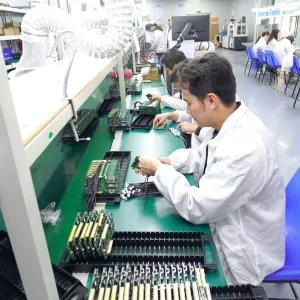
This high level of integration translates into significant advantages for international buyers. Chinese gigafactories employ advanced robotic assembly lines, high-precision laser welding equipment, and automated optical inspection (AOI) systems that eliminate human error. In addition to hardware excellence, these facilities utilize intelligent Warehouse Management Systems (WMS) and Manufacturing Execution Systems (MES) to track raw material lots back to their original mines. The resulting economies of scale and technical optimization allow Chinese suppliers to offer superior cost-performance ratios, rapid lead times, and customization capabilities that are difficult to match elsewhere.
Established in 2009, UX Power is an innovative enterprise dedicated to the research, development, engineering, and manufacturing of premium lithium battery systems. Over the past 15 years, we have built a reputation for efficiency, reliability, and safety. We serve a global client base, delivering customized solutions that drive clean energy transitions.
Our core corporate values guide our design processes, sourcing channels, and client relations. UX Power is structured around a central vision and mission:
UX Power’s Lithium Battery Module Technology Center brings together professional technical disciplines, including industrial design, power electronics, firmware design, mechanical structures, process engineering, and reliability testing. With a team of over 30 engineers, we offer customized solutions designed to match your specific application requirements.
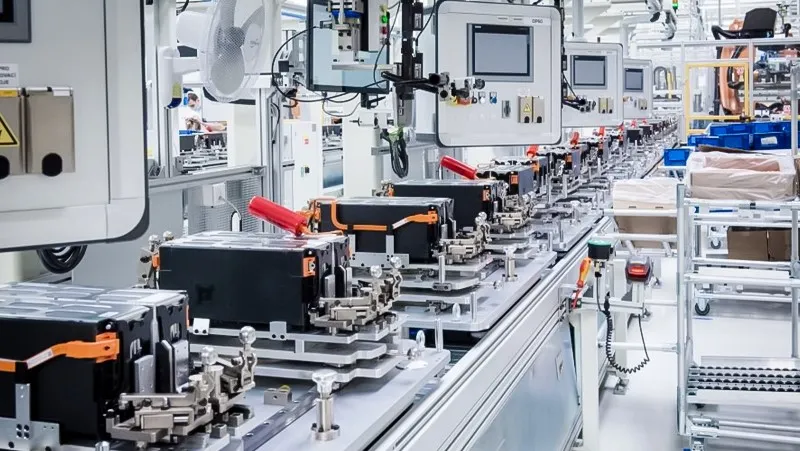
Our production facilities implement a high-standard factory management model. Our dedicated testing laboratories are fully equipped to conduct EMC testing, drop tests, mechanical vibration and shock testing, water resistance evaluations, corrosion resistance assessments, and thermal shock testing. These procedures ensure that every battery module delivered conforms to strict safety standards and operates reliably under challenging field conditions.
Energy storage systems must operate reliably across diverse environments and applications:
The future of energy storage lies in smart integration and advanced chemistry:
Procuring energy storage products on an OEM/ODM basis requires careful technical verification. Sourcing managers can use the following checklist to evaluate potential manufacturing partners:
 UX Power