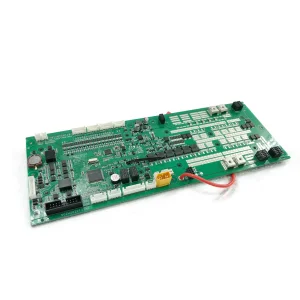
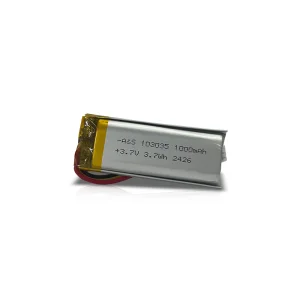
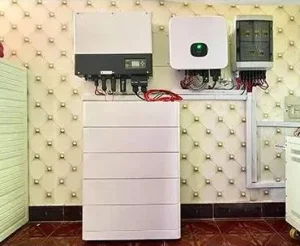
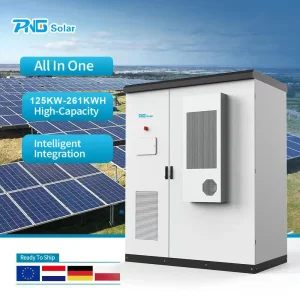
Wholesale distribution of smart BMS controllers, commercial lithium cells, stackable modules, and complete utility cabinet systems.
Commercial & Industrial Energy Storage Systems (BESS) at Gigawatt Scale: Market Drivers and Strategic Trajectories.
Faced with fluctuating renewable inputs from solar and wind farms, global grids are leveraging utility-scale batteries to handle peak demand shaving, frequency containment, and active capacity buffering.
Industrial operations achieve high financial optimization by deploying massive LiFePO4 cells. Lowering the overall lifetime levelized cost of energy storage through long cycle lives and higher efficiency.
Stringent decarbonization guidelines worldwide (such as the US Inflation Reduction Act and EU Green Deal) mandate grid-intertied battery banks to secure secondary energy supply chains and prevent carbon penalties.
An in-depth breakdown of battery chemistry safety margins, lifespan engineering, and thermal management technologies.
Grid-level operators prioritize safety, structural integrity, and cycles above energy density. This dynamic keeps Lithium Iron Phosphate (LiFePO4) at the absolute forefront of utility implementations. While standard Lithium Polymer or NMC chemistries maintain footprints in consumer electronics and mobility solutions, LiFePO4 excels under extreme stress due to its inherently high thermal runaway threshold (~270°C compared to NMC's ~210°C).
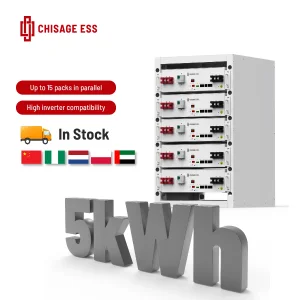
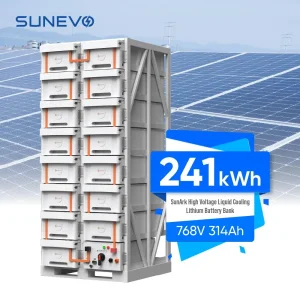
Furthermore, standard high-voltage integration utilizes intelligent battery rack configurations. These modules connect cells in series and parallel combinations to reach nominal system voltages up to 1000V DC and 1500V DC. Liquid-cooling setups within these systems have become standard for preventing hot-spot propagation, maintaining uniform cell temperature variations within 3°C.
Employs direct-to-plate glycol solution routing. Liquid cooling provides superior thermal stabilization over forced-air ventilation, prolonging overall module life by keeping operations inside the optimal temperature envelope.
Maintains cell consistency within 20mV thresholds, monitoring internal resistance and state-of-health metrics in real time. Eliminates capacity limitations caused by lagging cells.
While still emerging, Na-ion provides exceptional performance at low ambient temperatures (-30°C to -40°C), making it a viable future alternative for polar installations.
From custom OEM designs to gigawatt-scale production capacities—driving the boundaries of power lithium technology since 2009.
Lithium Batteries OEM
R&D Personnel Proportion
Factory Building Area
Global Partners
Annual Production Capacity
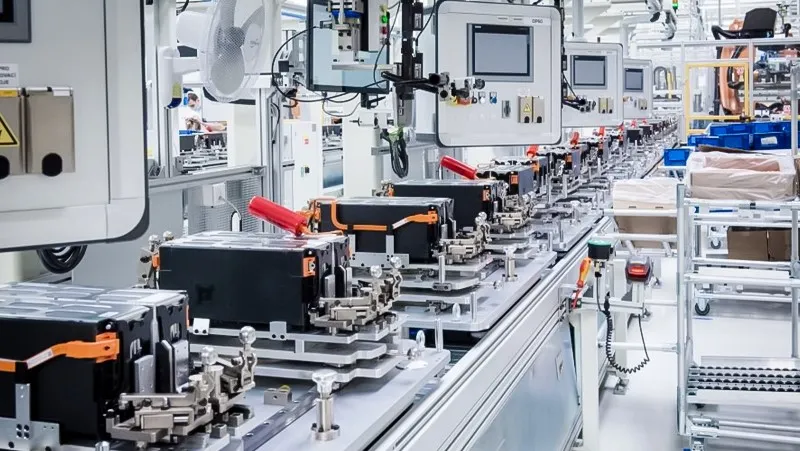
UX Power pays meticulous attention to every single manufacturing stage. Our standard facility features a state-of-the-art super first-class plant management layout. Complete testing laboratories are situated on-site, containing dedicated environments for EMC, free fall drop, structural vibration, severe shock resistance, waterproofing index validations, chemical corrosion, and intense thermal shock test chambers.
Our specialized engineering team, comprising over 30 dedicated researchers, focuses extensively on client-side requests, executing rapid adjustments to module structures, custom active BMS protocols, and mechanical shell protection schemes.
How utility-scale storage addresses specific regional grids and operational environments.
Tailored for high-energy industrial complexes. BTM battery systems protect facilities from hefty peak-demand power tariffs by discharging stored power when rates spike.
Replaces dependency on expensive diesel generators in islands or remote mining areas. Integrates solar arrays and wind power with local energy banks to maintain a clean grid loop.
Designed for power distribution utilities. Delivers sub-millisecond frequency control response, voltage stabilization, and black-start capabilities during outages.
Why Tier-1 engineering firms, solar developers, and commercial EPC firms choose UX Power.
Over 15 years of industry-leading experience in developing, manufacturing, and exporting advanced power lithium products.
A specialized R&D crew focused on firmware engineering, thermal mechanics, and safety-optimized PCB layouts.
Fully automated manufacturing setups, laser-welding clusters, and sorting instruments that guarantee consistent cell quality.
Complete customization from the base cells to battery management firmware and final enclosure shapes.
Technical support staff available to address configuration issues, grid compliance, and system commissioning.
Global presence as a trusted supplier of energy solutions for applications ranging from solar storage to industrial EV fleets.
Deployable containerized solutions optimized for high-power demands and long-duration storage.
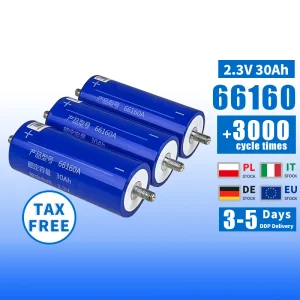
To support transition timelines, utility providers deploy massive 20-foot and 40-foot containerized BESS installations. These complexes host thousands of high-capacity cells (such as our high-durability 2.3V 30Ah LiFePO4 cells) arranged in balanced parallel racks. The containment unit incorporates automated fire suppression systems (utilizing Novec 1230 or FM-200 agents) paired with multi-stage gas detectors that identify volatile off-gassing before thermal runaway can trigger.
Furthermore, these industrial setups integrate directly with central Energy Management Systems (EMS) using Modbus TCP or CANbus. This enables grid operators to remotely control charging schedules based on weather predictions and market pricing fluctuations.
Essential design guidelines and technical clarifications for procurement officers and grid engineers.
A: LiFePO4 provides superior safety performance, structural longevity, and thermal stability. While traditional cells offer higher energy densities, they carry elevated risks of thermal runaway under continuous high-power cycles. LiFePO4 cells regularly deliver over 6,000 charge cycles at 80% Depth of Discharge (DoD) before dropping to 80% of their original capacity.
A: Extreme temperatures can accelerate capacity degradation. Working outside the optimal 15°C to 30°C temperature envelope increases internal resistance and degrades active chemical compounds. Modern systems integrate smart thermal plates and liquid-cooling piping to maintain uniform temperatures across the modules, extending operational life.
A: The BMS acts as the primary safety controller. It monitors parameters like cell voltage, current levels, and internal temperatures. In the event of anomalies—such as overcharging, over-discharging, or temperature spikes—the BMS automatically disconnects the affected module or rack to protect the system.
A: Moving to a 1500V platform increases system energy density and reduces system losses. This transition lowers installation footprints, reduces cabling requirements, and optimizes inverter matching, which cuts overall Balance of System (BOS) installation costs by 15% to 20%.
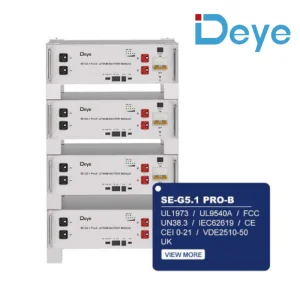
A: Global energy projects require key certifications to ensure safety and quality standards, including UL 1973 (for battery packs), UL 9540A (thermal runaway propagation testing), IEC 62619 (industrial applications), CE compliance, and UN 38.3 transport certification.
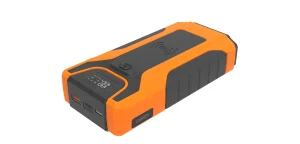
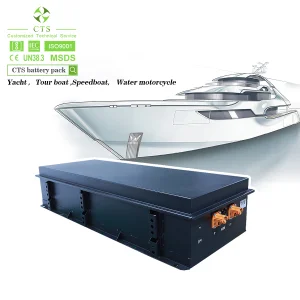
High-capacity lithium cells, portable emergency starters, off-grid telecom packs, and industrial vehicle traction batteries.
 UX Power