Lithium batteries quietly power phones, electric cars, medical devices, and renewable energy systems. Their influence reaches far beyond charging speed. They shape how societies store electricity, move through cities, and reduce dependence on fossil fuels. This is why Future Innovations In Lithium Battery Technology deserve careful attention, not exaggerated headlines.
Professor Shirley Meng, a leading battery scientist, captures the wider purpose clearly: “Energy storage is the key to a sustainable future.” Her statement reflects practical experience in materials science and battery research. Future cells may use solid electrolytes, silicon-rich anodes, lithium-metal designs, or safer low-cobalt chemistries. Each option could increase energy density, extend driving range, or reduce fire risks. Yet every gain creates new questions. Materials may become expensive. Manufacturing may remain difficult. Recycling systems are still developing.
No breakthrough is perfect.
This article examines why these innovations matter through performance, safety, sustainability, and real-world reliability. It considers the small details users notice, including faster charging during a winter commute, cooler battery packs inside crowded vehicles, and longer service life in grid storage containers. It also recognizes uncomfortable limits. Greater energy density does not automatically mean greater safety. Lower cobalt use may shift pressure toward other minerals. A promising laboratory result can weaken during mass production.
The future deserves optimism, but not blind confidence. Reliable progress will require transparent testing, responsible sourcing, skilled engineering, and better recycling infrastructure. Future Innovations In Lithium Battery Technology will matter most when they solve practical problems without creating larger ones elsewhere.
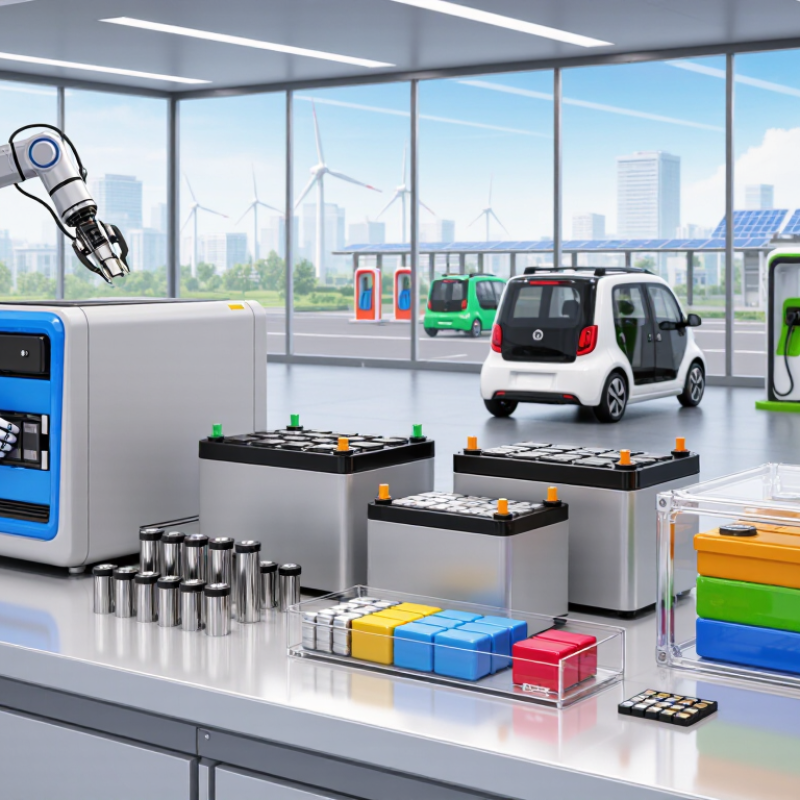
Lithium battery technology usually means rechargeable lithium-ion cells. Each cell contains an anode, cathode, electrolyte, and porous separator. During charging, lithium ions move through the electrolyte toward the anode. Electrons travel through an external circuit instead. During use, this movement reverses and produces electricity. That is the working principle.
Scale makes this chemistry important. The International Energy Agency’s Global EV Outlook 2024 reports that electric-vehicle battery demand exceeded 750 GWh in 2023, rising about 40% year on year. BloombergNEF’s 2023 Battery Pack Price Survey recorded an average lithium-ion pack price of 139 dollars per kWh, down 14%. Lower prices can improve access, but they do not remove safety or resource concerns.
Future improvements focus on better materials, cooling, charging, and recycling. Silicon-rich anodes may store more lithium than conventional graphite, while solid electrolytes could reduce flammability risks. Yet laboratory results can disappoint in real vehicles. Heat, vibration, cold weather, and repeated charging change performance. A battery may look efficient on paper, then lose capacity in winter. Manufacturing quality also matters. The IEA notes that battery supply chains remain geographically concentrated, creating exposure to delays and material shortages. This explanation has limits: chemistry varies between cells, and published performance figures rarely reflect every driving condition.
Why Future Innovations in Lithium Battery Technology Matter?
Why Future Battery Innovations Are Becoming Necessary
Battery demand is rising faster than many systems can adapt. The International Energy Agency reported that global electric-vehicle battery demand reached about 750 GWh in 2023. It also projects battery demand could grow sixfold by 2035 under current policy settings. That pressure affects charging networks, mineral supply, recycling, and grid stability.
Future innovation is necessary because today’s batteries still involve trade-offs. Higher energy density can extend driving range, but safety and material stress require careful control. Faster charging may save time, yet it can increase heat and shorten battery life. The U.S. Department of Energy highlights solid-state designs, improved recycling, and alternative chemistries as important research directions. These technologies sound promising. They are not ready everywhere.
Tips: Compare batteries by total lifetime value, not only capacity. Check charging speed, temperature performance, repair options, and recycling plans. Industry reports often present forecasts as certainty. They are not. The IEA’s projections depend on policy, investment, and consumer behavior. I sometimes find battery discussions too optimistic. A laboratory result may fail on a cold highway, after repeated charging, or during a material shortage. Future progress should therefore measure durability, safety, emissions, and cost together. That's harder. It is also more honest.
Global electric-vehicle battery demand is projected to grow from approximately 0.75 TWh in 2023 to about 3.5 TWh by 2030 under the International Energy Agency’s stated-policies scenario. This rapid increase strengthens the need for batteries with higher energy density, improved safety, longer service life, lower material intensity, and better recycling performance.
Data source: International Energy Agency, Global EV Outlook 2024. Historical values are rounded; the 2030 value is a projection.
Why Future Innovations in Lithium Battery Technology Matter?
Key advances are reshaping the next generation of lithium batteries. The International Energy Agency reported that global electric-vehicle battery demand exceeded 750 GWh in 2023. It also expects demand to rise sharply by 2030. This pressure is driving silicon-rich anodes, solid-state designs, and improved lithium-metal research. These technologies aim to store more energy in smaller cells. However, laboratory performance can look better than road performance.
Silicon can hold far more lithium than graphite. Its expansion remains a serious engineering problem. Engineers are testing flexible binders, protective coatings, and blended anodes to reduce cracking. Solid-state batteries may improve safety and energy density, but production consistency is still difficult. The IEA’s Batteries and Secure Energy Transitions report identifies recycling, mineral efficiency, and manufacturing scale as major priorities. BloombergNEF reported an average lithium-ion battery pack price of 115 dollars per kWh in 2024. Lower prices help adoption, but they do not remove supply-chain risks.
Tips: Compare cycle life, charging speed, safety testing, and performance in cold conditions. Do not trust energy-density claims alone. Ask whether the figures come from a full commercial cell or a small laboratory sample. My view is cautious. Faster charging matters, yet durability may matter more after several years. Future progress will depend on chemistry, thermal management, software control, and responsible material recovery working together.
| Technology Dimension | Current Typical Range | Expected Next-Generation Direction | Why It Matters | Development Considerations |
|---|---|---|---|---|
| Gravimetric energy density | Approximately 150–300 Wh/kg at the cell level, depending on chemistry and design | Higher-nickel cathodes, silicon-rich anodes, lithium-metal anodes, and solid-state cells may increase energy stored per kilogram | Enables longer driving range, lighter portable devices, and more compact energy-storage systems | Higher energy density can increase thermal, mechanical, manufacturing, and cycle-life challenges |
| Silicon-based anodes | Commercial cells generally use graphite, with limited silicon content in some designs | Greater silicon incorporation with advanced binders, coatings, engineered particles, and pre-lithiation | Silicon has a theoretical specific capacity of about 3,579 mAh/g, much higher than graphite's approximately 372 mAh/g | Silicon expands substantially during lithiation, which can cause particle fracture, capacity loss, and shorter service life |
| Solid-state electrolytes | Most lithium-ion batteries use liquid or gel polymer electrolytes | Ceramic, sulfide, oxide, or polymer solid electrolytes paired with high-capacity electrodes | May improve resistance to leakage and flammability while supporting lithium-metal designs | Interface resistance, manufacturing pressure, moisture sensitivity, defects, and large-scale production remain important barriers |
| Fast charging | Many systems target approximately 10–80% charging in 20–40 minutes under suitable conditions | Improved electrode architecture, electrolyte formulation, thermal control, and charging algorithms | Reduces charging downtime for electric mobility, industrial equipment, and grid-support applications | Fast charging can accelerate lithium plating, heat generation, degradation, and infrastructure demand |
| Cycle life | Common lithium-ion cells can deliver several hundred to more than 2,000 full cycles, depending on chemistry and operating conditions | Longer life through stable cathodes, protective interfaces, improved cell balancing, and better thermal management | Lowers replacement frequency, lifetime cost, and material consumption | Temperature, charge rate, depth of discharge, state of charge, and mechanical stress strongly affect aging |
| Thermal safety | Safety depends on cell chemistry, separator design, battery-management systems, cooling, and mechanical protection | Nonflammable or less-flammable electrolytes, stronger separators, improved sensors, and early fault detection | Reduces the probability and severity of thermal runaway and improves system reliability | No single material eliminates risk; cell design, manufacturing quality, protection circuits, and system integration are all essential |
| Low-temperature performance | Power capability and charging acceptance generally decline below 0°C because of slower ion transport and increased plating risk | Low-temperature electrolytes, improved electrode coatings, preheating, and adaptive charging control | Improves reliability in cold climates and reduces the energy needed for battery heating | Charging a cold lithium-ion battery too aggressively can cause metallic lithium deposition and permanent damage |
| Battery-management systems | Voltage, current, temperature, state of charge, and basic balancing are routinely monitored | Model-based estimation, cloud-connected diagnostics, digital twins, and predictive maintenance | Improves usable capacity, safety, warranty decisions, and end-of-life planning | Accurate prediction requires high-quality sensor data, validated models, cybersecurity, and standardized communication |
| Material sustainability | Environmental impact varies with mining, refining, manufacturing energy, transport, and chemistry selection | Lower-cobalt chemistries, reduced critical-mineral content, renewable-powered production, and material-efficient designs | Can reduce supply-chain exposure, emissions, resource pressure, and social risks | Sustainability must be evaluated across the full life cycle rather than by chemistry alone |
| Recycling and second life | Recycling methods include pyrometallurgical, hydrometallurgical, and direct-recycling approaches | Design for disassembly, automated sorting, improved recovery rates, and standardized battery labeling | Recovers valuable materials and may extend useful life in stationary storage applications | Collection logistics, variable pack designs, contamination, safety, and economic viability affect recovery outcomes |
| Manufacturing scalability | Large-scale production relies on tightly controlled coating, drying, calendaring, assembly, formation, and quality inspection | Dry-electrode processing, higher automation, in-line inspection, and data-driven quality control | Can reduce energy use, factory footprint, production cost, and defect rates | New processes must achieve consistent quality, high yield, regulatory compliance, and long-term reliability |
Note: Values are technology-level ranges or generally reported engineering benchmarks. Actual performance varies with cell chemistry, format, operating temperature, charging protocol, and system design.
New lithium battery technologies could reshape transport, electricity, construction, and industrial logistics. The change will not come from capacity alone. Safer chemistries, faster charging, longer cycle life, and lower mineral intensity matter just as much. According to the International Energy Agency’s Global EV Outlook 2024, electric vehicle battery demand exceeded 750 GWh in 2023, rising about 40%. That scale makes small design improvements visible across supply chains. Even a modest increase in usable range can reduce charging stops for delivery fleets. That sounds simple.
Stationary storage may benefit differently. Grid operators need batteries that sit safely for years, respond in milliseconds, and tolerate repeated cycling. Long-duration designs could store midday solar power until evening demand, reducing dependence on gas-fired balancing. Research also targets silicon-rich anodes, solid electrolytes, sodium-ion alternatives, and recycling systems. Each option carries trade-offs involving cost, temperature performance, manufacturing complexity, or scarce materials. BloombergNEF reported average lithium-ion pack prices of 139 dollars per kWh in 2023, a 14% annual decline.
Those figures encourage investment, but they can also create overconfidence. Laboratory energy density does not equal reliable performance in a crowded warehouse or a freezing bus depot. Manufacturers must validate fire resistance, repairability, software controls, and end-of-life recovery. The IEA warns that mineral supply chains remain exposed to geographic concentration and project delays. That is the uncomfortable part. Future batteries may transform industries, yet deployment will depend on boring details: thermal sensors, trained technicians, testing, and honest warranties. Progress will be uneven.
Future lithium battery innovation matters because safety must scale with demand. The International Energy Agency reported more than 14 million electric cars were sold worldwide in 2023. It also estimated electric-car battery demand could exceed 1.5 terawatt-hours by 2030 under stated policies. More cells mean more stored energy in garages, buses, ships, and grid containers. A small defect can become a thermal event. That risk deserves less marketing and more measurement.
Thermal runaway remains the central engineering challenge. Internal short circuits may arise from damaged separators, metal particles, manufacturing variation, or fast charging. Heat can spread between tightly packed cells. Testing must examine abuse, aging, crash damage, and propagation, not only fresh-cell performance. UL 9540A testing evaluates fire and explosion behavior in energy-storage systems, while UNECE Regulation No. 100 addresses rechargeable electrical energy storage safety in vehicles. These frameworks help, but compliance is not proof of perfect field performance.
Future designs should combine safer chemistries, stronger separators, pressure relief, and cell-level sensing. Battery-management systems need earlier warnings for abnormal temperature, voltage, and gas generation. Recycling also matters, because damaged cells can create hazards during transport and processing. The IEA’s Batteries and Secure Energy Transitions report warns that battery supply chains must expand while meeting sustainability and resilience goals. That balance is difficult. Engineers still need clearer data from real-world failures, especially after years of cycling. We may be overconfident when laboratory results replace long-term evidence. Better batteries will not come from energy density alone. They will come from controlled failure.
A rechargeable cell contains an anode, cathode, electrolyte, and porous separator. Lithium ions move through the electrolyte during charging. Electrons travel through an external circuit. During use, the movement reverses and creates electricity.
They can support transport, grid storage, construction equipment, and industrial logistics. Battery demand exceeded 750 GWh in 2023. Small improvements can reduce charging stops for delivery vehicles. Scale changes everything.
Better materials may increase usable range and cycle life. Faster charging could shorten depot waiting times. Improved cooling may protect batteries during heavy use. However, laboratory results may disappoint in real vehicles.
Stationary batteries can store midday solar power for evening demand. They can respond within milliseconds. Long-duration systems may reduce reliance on backup generation. They still need safe operation for many years.
Thermal runaway is a major concern. Damaged separators, metal particles, manufacturing defects, or fast charging can cause internal shorts. Heat may spread between tightly packed cells. A small defect can become serious.
Stronger separators, safer chemistries, pressure relief, and cell-level sensors can help. Management systems should detect unusual temperature, voltage, and gas generation. Testing should include aging, crashes, abuse, and heat spread. Fresh-cell testing is not enough.
Silicon-rich anodes may store more lithium than traditional graphite. Solid electrolytes could reduce some flammability risks. Manufacturing remains difficult. I may be too optimistic if these technologies are judged only in laboratories.
Cold weather can reduce capacity and charging performance. Heat, vibration, and repeated charging also change battery behavior. A battery may look efficient on paper, then perform poorly in winter. Real conditions are messier.
Average lithium-ion pack prices reached about 139 dollars per kilowatt-hour in 2023. Lower prices may improve access. They do not remove safety or resource concerns. Supply chains remain exposed to delays and concentrated mineral sources.
Recycling can recover materials and reduce pressure on new mineral supplies. It also requires careful handling of damaged cells. Transport and processing can create hazards. The industry still needs better long-term evidence and more honest warranties.
Future Innovations In Lithium Battery Technology are essential for meeting the growing demand for cleaner, safer, and more efficient energy storage. Lithium batteries work by moving lithium ions between two electrodes through an electrolyte, creating an electrical current. As electric transportation, renewable energy systems, portable devices, and large-scale storage continue to expand, existing batteries must improve in energy density, charging speed, lifespan, affordability, and environmental performance. Future development may include solid-state designs, advanced electrode materials, improved electrolytes, smarter battery management systems, and more effective recycling methods.
These advances could transform major industries by extending driving ranges, stabilizing renewable power supplies, reducing charging times, and making electronic equipment more reliable. However, progress must address challenges such as thermal instability, material availability, manufacturing costs, recycling complexity, and long-term durability. Strong testing, responsible material sourcing, safer designs, and clear safety standards will be necessary to reduce risks. Overall, continued innovation can make lithium battery technology more sustainable and dependable while supporting the broader transition toward efficient and lower-emission energy systems.

UX Power