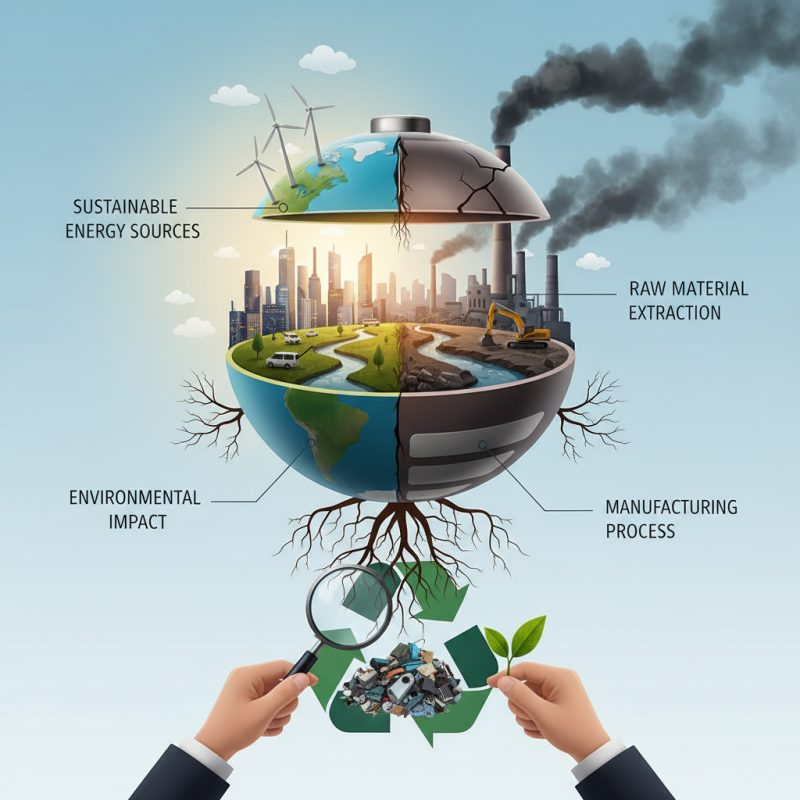
As the world transitions to more sustainable energy sources, the significance of battery technologies grows. These technologies play a crucial role in various sectors, including electric vehicles and renewable energy storage. However, the Environmental Impact of Modern Battery Technologies raises several important questions.
Many consumers view batteries as green solutions, but the manufacturing process can be harmful. Raw material extraction often leads to significant environmental degradation. For instance, lithium mining can disrupt local ecosystems, affecting water quality and land use. Even recycling practices present challenges, as not all methods are environmentally friendly.
Despite advances in battery design and efficiency, the overall impact cannot be ignored. Awareness of these issues is essential for informed choices. The promise of cleaner energy must be balanced against the realities of battery production. Understanding this complex relationship helps consumers and policymakers make better decisions for a sustainable future.
Overview of Modern Battery Technologies and Their Applications
Modern battery technologies have transformed various sectors, from electric vehicles to renewable energy storage. Lithium-ion batteries dominate the market, accounting for over 70% of battery capacity in electric vehicles (EVs) by 2021. These batteries are efficient but have a significant environmental footprint. The extraction of lithium, cobalt, and nickel can lead to serious ecological degradation. Reports indicate that mining activities in regions like South America have raised concerns about water scarcity and soil contamination.
Emerging alternatives, such as solid-state batteries, offer potential improvements. They promise higher energy densities and improved safety, as they eliminate flammable electrolytes. According to industry analysis, solid-state batteries could increase EV range by up to 30%. However, scalability remains a challenge. Currently, they account for less than 5% of the battery market. Research and development in this area are critical for wider adoption.
The recycling of batteries presents another layer of complexity. Approximately 95% of lithium-ion batteries can be recycled, yet only a small fraction goes through proper recycling processes. This gap emphasizes a need for better infrastructure and public awareness. The lack of established systems might hinder sustainability efforts. Overall, while modern battery technologies hold promise, their environmental implications require careful examination and proactive solutions.
Environmental Impact of Modern Battery Technologies
This chart illustrates the environmental impact scores of various modern battery technologies on a scale from 1 to 10, where lower scores indicate a greater environmental impact. Lithium-ion batteries, commonly used in consumer electronics, score 7 due to concerns over resource extraction and recycling challenges. Lead-acid batteries, while widely recycled, score the highest at 9 because of their toxic materials. Nickel-metal hydride is comparatively better, scoring 6. New technologies like solid-state and flow batteries show promise with lower impact scores of 5 and 4 respectively, highlighting their potential for future adoption.
Types of Modern Batteries: Lithium-Ion, Solid-State, and Beyond
Modern battery technologies are vital for powering the future. Among these, lithium-ion batteries dominate the market. They are widely used in electronics and electric vehicles. According to a report by the International Energy Agency, lithium-ion batteries made up over 90% of the rechargeable batteries sold in 2022. Their energy density makes them efficient. However, lithium-ion batteries have significant environmental drawbacks. Mining lithium has been linked to water depletion and soil contamination.
Solid-state batteries are emerging as a promising alternative. Unlike lithium-ion, they use solid electrolytes. This design increases safety and longevity. The U.S. Department of Energy estimates that solid-state batteries could improve energy density by 50%. However, research is still ongoing. Manufacturing these batteries may generate substantial waste, which calls for sustainable practices.
Additionally, other technologies like sodium-ion batteries are being explored. They offer a potentially less harmful alternative to the environment. Yet, the technology is still in its infancy. While the search for greener battery solutions continues, many questions remain. The transition must address not only performance but also environmental impacts. Balancing efficiency with ecological responsibility is crucial.
Environmental Impact of Modern Battery Technologies
| Battery Type |
Carbon Footprint (kg CO2e/kWh) |
Recyclability (%) |
Toxicity Level |
Resource Availability |
| Lithium-Ion |
125 |
90 |
Medium |
Moderate |
| Solid-State |
90 |
95 |
Low |
Abundant |
| Lead-Acid |
265 |
99 |
High |
Limited |
| Nickel-Metal Hydride |
100 |
75 |
Medium |
Moderate |
Environmental Challenges Associated with Battery Production
The production of modern batteries significantly impacts the environment. Mining for raw materials like
lithium, cobalt, and nickel poses serious ecological challenges.
According to a report by the International Energy Agency (IEA),
lithium extraction can consume nearly 500,000 gallons of water
per ton. This water-intensive process leads to depletion of local water sources, affecting agriculture and drinking supplies
for nearby communities.
Moreover, cobalt mining is often linked to human rights violations,
especially in regions like the Democratic Republic of Congo. The environmental degradation from mining exposes ecosystems
to heavy metals and toxins. The Global Battery Alliance estimates that the carbon footprint of battery production could
reach 4,200 million tons of CO2 by 2030 if current practices continue.
Waste management is another pressing issue. As battery technology evolves, the disposal of old batteries becomes crucial.
The World Economic Forum reports that only 5% of batteries are
currently recycled properly. This leads to hazardous waste accumulating in landfills, resulting in soil and groundwater
contamination. Both consumers and industries must reflect on their practices and work towards
more sustainable solutions.
Recycling and Disposal: Managing Battery Waste Responsibly
The disposal of batteries presents a significant environmental challenge. Many modern batteries contain hazardous materials like lithium, cobalt, and nickel. Improper disposal can lead to soil and water contamination. These materials can leach into ecosystems, causing long-term damage to wildlife and human health.
Recycling offers a promising solution. It reduces the demand for raw materials and minimizes pollution. However, the recycling process itself can be complex and resource-intensive. Many facilities lack the technology to efficiently recover valuable materials. This gap highlights the need for innovation in recycling methods. It calls for a concerted effort from businesses and governments to incentivize responsible recycling practices.
Consumers play a crucial role too. Many are unaware of proper battery disposal methods. Often, improperly discarded batteries end up in landfills. Awareness campaigns are vital. They can educate people on local recycling options and promote sustainable actions. Yet, challenges remain in the widespread adoption of these practices. There is still much room for improvement in battery waste management.
Future Innovations in Eco-Friendly Battery Technologies
The shift towards eco-friendly battery technologies is more urgent than ever. Reports indicate that battery production accounts for 30% of carbon emissions in the automotive sector. Innovations focusing on sustainable materials can significantly reduce this footprint. For instance, sodium-ion batteries are gaining traction as a viable alternative to lithium-ion. These have the potential to lower greenhouse gas emissions by up to 50%, according to a recent study by the International Energy Agency.
Research shows that recycling programs for battery components can further minimize environmental impact. Currently, only 5% of lithium batteries are recycled effectively. More efficient recycling processes could reclaim valuable materials, reducing the need for mining. Advanced technologies like hydrometallurgical methods could increase recovery rates to over 90%. However, this presents challenges, as the industry grapples with regulatory hurdles and the need for infrastructure upgrades.
Despite progress, some eco-friendly technologies remain unproven at scale. Solid-state batteries promise safety and energy density but face cost and manufacturing challenges. These innovations require investment and research. Only through collaboration across industries can we fully embrace green battery solutions that do not compromise performance. The future indeed looks promising but demands careful reflection on the path forward.
FAQS
: The main types include lithium-ion and solid-state batteries. Sodium-ion batteries are also being explored.
They have high energy density, making them efficient for electronics and electric vehicles.
Mining lithium can lead to water depletion and soil contamination. It raises ecological concerns.
Solid-state batteries use solid electrolytes, increasing safety and longevity. They promise better performance.
Sodium-ion batteries could potentially reduce emissions by up to 50%. They are still in early development.
Currently, only 5% of lithium batteries are effectively recycled. Improving processes is essential for recovery.
Innovations using sustainable materials can drastically cut carbon footprints from battery production.
They show promise but face challenges in cost and manufacturing. Their future remains uncertain.
Collaboration is needed for research and investment in new technologies. It can help address performance and environmental concerns.
Balancing efficiency with ecological responsibility is vital for the future of battery technology.
Conclusion
The article titled "Environmental Impact of Modern Battery Technologies Explained" provides a comprehensive overview of current battery technologies and their applications. It discusses various types of batteries, including lithium-ion and solid-state, emphasizing their prominent roles in powering modern devices and vehicles. However, the environmental impact of modern battery technologies raises significant concerns, particularly in terms of resource extraction, energy-intensive production processes, and pollution.
Additionally, the article highlights the critical challenges associated with battery production and disposal, stressing the importance of recycling and managing battery waste responsibly. Looking ahead, it explores future innovations aimed at developing more eco-friendly battery technologies that can mitigate environmental damage and promote sustainability. Understanding the environmental impact of modern battery technologies is essential for advancing towards greener energy solutions.

 UX Power