Choosing a battery in 2026 will involve more than comparing advertised range or charging speed. It will require evidence from roads, factories, and recycling facilities.
This introduction explores How Battery Technology Is Advancing Clean Mobility through a practical, chemistry-based lens. Lithium iron phosphate batteries can offer strong thermal stability and long service life. Nickel-manganese-cobalt cells may provide higher energy density for heavy vehicles and longer routes. Sodium-ion systems could reduce dependence on scarce materials, although their lower energy density remains a limitation. Solid-state batteries appear promising, but manufacturing scale and durability still require careful validation.
Venkat Srinivasan, director of the Argonne Collaborative Center for Energy Storage Science, has emphasized, “There is no one-size-fits-all battery.” That principle should guide every 2026 mobility decision. A city bus operating at dawn in freezing weather needs different performance from a delivery van making repeated short stops. Temperature control, charging access, payload, warranty terms, and battery recycling should all influence the final choice.
The details matter. A battery that charges quickly may degrade faster under constant high-power use. A cheaper pack may create higher replacement costs later. Real-world data is still incomplete. Some promises may age poorly.
Reliable selection therefore depends on verified cycle-life tests, transparent material sourcing, independent safety results, and measured fleet performance. Clean mobility is not powered by one perfect chemistry. It advances through better matching, honest testing, and continuous engineering improvements.
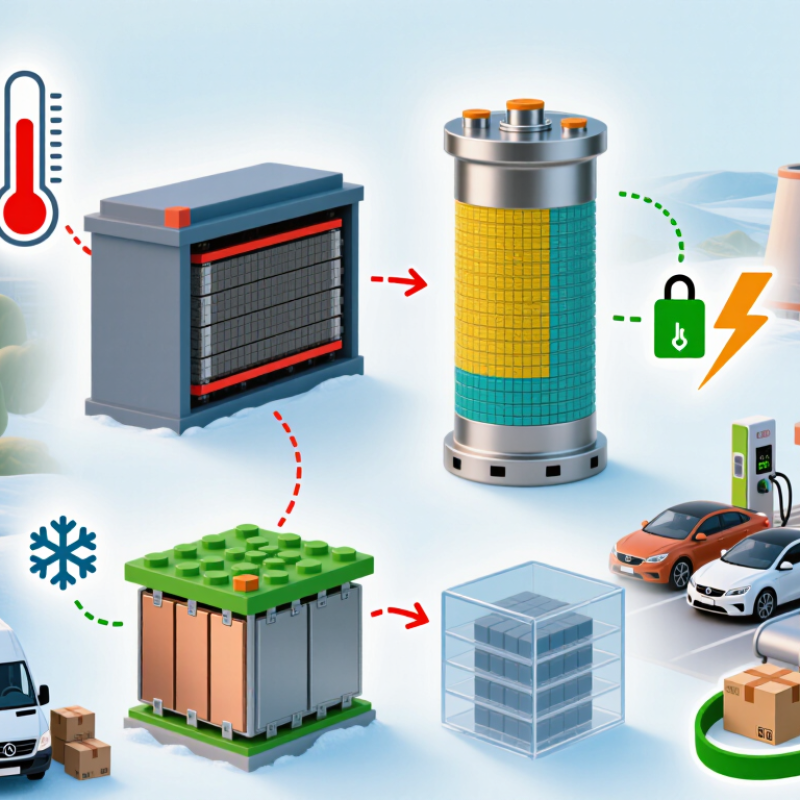
Battery technology basics shape every clean-mobility decision in 2026. Lithium-ion cells still dominate, but their chemistries behave differently. LFP cells use iron and phosphate, offering strong thermal stability and long cycle life. NMC cells store more energy in less space, but require tighter thermal management. Sodium-ion cells reduce lithium dependence, yet lower energy density can increase vehicle weight. Solid-state designs remain promising, but large-scale durability evidence is still limited. That gap matters.
The IEA’s Global EV Outlook 2025 reported more than 17 million electric cars sold globally in 2024. It also recorded over 1 TWh of electric-vehicle battery demand. BloombergNEF reported an average lithium-ion pack price of 115 dollars per kWh in 2024, a 20% annual decline. These figures show rapid progress, not guaranteed affordability. Real performance depends on temperature, charging habits, software, and repairability. A cold morning can expose weaknesses that laboratory charts hide. No chemistry wins everywhere.
Tips: Compare usable energy, not advertised capacity. Request cycle-life data from realistic temperatures. Check charging curves, warranty terms, recycling plans, and service access. For buses or delivery fleets, model daily routes and depot charging first. IEA data can guide assumptions, but local traffic and climate deserve equal weight. A technically sound choice may still be imperfect.
Choosing battery technology in 2026 starts with the vehicle’s daily work, not a laboratory headline. An electric bicycle needs low weight, safe operation, and dependable power on steep streets. A passenger car places greater value on usable range, fast charging, cabin safety, and predictable capacity over many years. Cold-weather performance also matters. A battery that performs well at 25°C may charge slowly near freezing. Small details matter.
Urban buses need high cycle life because they may stop every few minutes for a decade. Their packs must accept repeated opportunity charging without excessive heat. Delivery vans need a different balance: moderate energy density, strong regenerative-braking performance, and simple service procedures. Heavy trucks demand high continuous power, thermal control, and charging access that fits scheduled routes. Marine mobility adds corrosion protection and strict compartment monitoring. Requirements overlap, but they are not interchangeable.
Engineers should compare total operating cost, usable energy, safety margins, repairability, and end-of-life handling. Testing should include real routes, payload changes, rain, dust, hills, and winter starts. Independent safety testing strengthens technical confidence. A digital model helps, but it can hide inconvenient assumptions. One overlooked charging pause can distort fleet economics. That assumption fails. No chemistry wins every test. Teams should document trade-offs and remain open to revision as cells, regulations, and infrastructure change.
Lithium-ion remains the practical baseline for most electric vehicles. It offers mature supply chains, strong energy density, and predictable charging behavior. However, thermal management still matters during fast charging or extreme heat. In winter testing, range losses can feel surprisingly severe.
Solid-state batteries promise greater safety and higher energy density. Their reduced flammable liquid content is attractive for compact vehicles and long-distance transport. Yet production consistency, cost, and low-temperature performance remain difficult questions.
Sodium-ion batteries use more abundant materials and may reduce material pressure. Their lower energy density suits urban vehicles, fleet vans, and stationary charging support. They are not automatically the greener choice. Manufacturing energy and recycling systems still influence the result.
Emerging batteries, including lithium-sulfur and metal-air designs, could change mobility again. Their laboratory results look impressive, but durability under daily vibration remains uncertain. Real roads are less forgiving than test chambers. Buyers should compare usable energy, charging speed, cycle life, repair access, and verified safety data. A battery’s chemistry is only one part of ownership.
Tips: Match chemistry to the route. Choose sodium-ion for shorter, predictable trips when cost matters most. Consider solid-state only when independent durability data becomes available. Ask for cold-weather range figures, not just laboratory ratings. Leave room for doubt. Claims can age faster than batteries.
How to Choose Battery Technology for Clean Mobility in 2026?
Evaluating Cost, Safety, Sustainability, and Charging Infrastructure
Choosing battery technology in 2026 means matching chemistry to duty cycle, not chasing the highest energy density. BloombergNEF’s 2024 Battery Price Survey placed the average lithium-ion pack at $115 per kWh. That figure fell 20% year on year, yet pack price remains only part of ownership cost. Lithium iron phosphate cells usually reduce exposure to nickel and cobalt, while nickel-rich chemistries can provide greater range. Cold climates complicate that comparison. The trade-off is real. It is not tidy.
Safety depends on cell spacing, thermal barriers, monitoring software, and manufacturing discipline. Independent testing should examine overcharge, crush damage, water ingress, and thermal propagation. However, safety claims often describe laboratory conditions, not a damaged vehicle beside a roadside. The International Energy Agency says recycling will matter more as larger numbers of batteries reach retirement. Today, recycled material cannot fully replace new mining. That limitation deserves more honest discussion.
Charging infrastructure can overturn a technically excellent choice. The IEA’s Global EV Outlook 2024 counted more than four million public charging points worldwide at the end of 2023. It also estimates public charging capacity must expand about sixfold by 2035 under stated policies. A delivery van needs dependable overnight charging. A taxi needs fast, repeated access. Those are different engineering problems. Grid connection fees, winter power loss, and queueing time can erase a cheap battery’s advantage. I would not choose chemistry from a brochure alone. Real route data is still missing in many procurement decisions.
Evaluating cost, safety, sustainability, and charging infrastructure
How to read the chart: The index combines publicly reported performance ranges for battery cost, usable energy density, cycle durability, thermal safety, material sustainability, and charging readiness. A score of 100 represents the strongest practical fit for clean mobility in 2026; it is a comparative decision index, not a laboratory measurement.
Key takeaway: Lithium iron phosphate offers a strong balance of cost, safety, durability, and material sustainability. Nickel-rich lithium-ion cells provide higher energy density where vehicle weight and driving range are priorities, but they generally involve higher material and thermal-management requirements. Sodium-ion technology can reduce dependence on lithium, nickel, and cobalt, while solid-state batteries remain promising but are less mature for mass deployment.
Indicative data synthesized from the International Energy Agency Global EV Outlook, U.S. Department of Energy battery technology reports, Argonne National Laboratory GREET data, and peer-reviewed battery research available through 2024–2025.
Selecting a battery starts with the vehicle’s daily work, not its brochure range. A small urban car may benefit from lithium iron phosphate cells. They offer strong cycle life, stable thermal behavior, and practical cost control. Their lower energy density can reduce cabin space or increase vehicle weight. That trade-off matters less on short city routes.
Long-distance cars and heavy trucks face different pressures. Nickel-rich lithium-ion cells provide higher energy density, which can extend range without adding excessive mass. However, they demand careful thermal management and may carry higher material and replacement costs. Fleet operators should study route length, payload, charging windows, and winter performance. A battery that looks efficient in testing may disappoint beside a depot with limited power.
For buses, delivery vans, and shared mobility, cycle life often matters more than peak range. Frequent charging can punish unsuitable cells. Sodium-ion technology may fit some lower-range vehicles, especially where cold-weather output and supply resilience are priorities, but real-world availability remains uneven in 2026. Solid-state systems remain promising for future applications, yet production maturity and repair procedures need close scrutiny. Field trials should include heat, vibration, fast charging, and degraded cells. I would not choose from laboratory figures alone. Real routes are messier.
It has mature supply chains, strong energy density, and predictable charging. Fast charging still requires careful thermal management. Winter range can fall sharply.
They may improve safety and energy density. Less flammable liquid is useful in compact vehicles and long-distance transport. Production remains expensive and inconsistent.
Not yet. Low-temperature performance and long-term durability need independent evidence. Laboratory promises can age quickly.
They fit shorter, predictable trips, urban vehicles, fleet vans, and stationary charging support. Their lower energy density limits long-range use. Cost may matter more.
No. They use more abundant materials, but manufacturing energy still matters. Recycling systems remain important. Greener is not automatic.
Check independent tests covering overcharging, crushing, water entry, and thermal spread. Ask about cell spacing, barriers, monitoring, and manufacturing controls. Roadside damage is different.
A delivery van needs dependable overnight charging. A taxi needs repeated fast charging. Connection fees, winter losses, and queues can erase savings.
Ask for usable energy, charging speed, cycle life, repair access, and verified safety data. Request cold-weather range figures. Brochures are incomplete.
Lithium-sulfur and metal-air designs may offer impressive energy potential. Daily vibration and durability remain uncertain. Real roads are unforgiving.
No. Route length, climate, charging access, repair support, and battery life also matter. The answer is rarely tidy. More route data is needed.
Choosing the right battery technology will be essential for advancing clean mobility in 2026. How Battery Technology Is Advancing Clean Mobility depends on matching battery characteristics with the needs of each application, including passenger vehicles, public transport, delivery fleets, two-wheelers, and specialized mobility systems. Key considerations include energy density, power output, charging speed, operating range, durability, weight, and performance in different climates.
Lithium-ion batteries remain a practical option because of their established manufacturing and charging infrastructure, while solid-state batteries may offer improved safety and energy density as they mature. Sodium-ion technology could provide a more resource-flexible and cost-conscious alternative, and emerging chemistries may unlock further improvements. A complete evaluation should also consider purchase and ownership costs, thermal safety, material availability, recycling potential, lifecycle emissions, and local charging access. Ultimately, the best choice is not a single universal chemistry, but the technology that delivers reliable performance, responsible resource use, and affordable operation for each clean mobility use case.

UX Power