China Top 10 Battery Suppliers How to Choose Reliable Tech?

Time:2026-11-16 Author:Henry
0%

China’s battery industry includes suppliers serving electric vehicles, energy storage, consumer electronics, and industrial equipment. A “top 10” list can help buyers build a shortlist, but rankings vary by product type, market, and evaluation criteria. A company known for large-scale vehicle cells may not suit a project needing compact batteries or responsive engineering support.

How To Choose Reliable Battery Technology starts with the application. Define the required capacity, operating temperature, charging speed, expected service life, and safety controls. Then compare suppliers using current technical datasheets, test conditions, production capabilities, quality procedures, and after-sales support. Ask how cells are matched, how batches are traced, and what warranty terms cover. Details matter.

A strong claim should be verifiable. Request sample test results, relevant certifications, and references for comparable applications; check that the documents match the exact cell or battery system being offered. A polished brochure is not proof. Neither is a low price. If possible, test samples under realistic loads and temperatures, and clarify who handles troubleshooting after delivery. These checks take time, and they may expose gaps in a supplier’s documentation. That is useful, even if it complicates the shortlist. No ranking can replace application-specific engineering review, but careful comparisons can reduce avoidable risk and help buyers select technology they can support over its full working life.
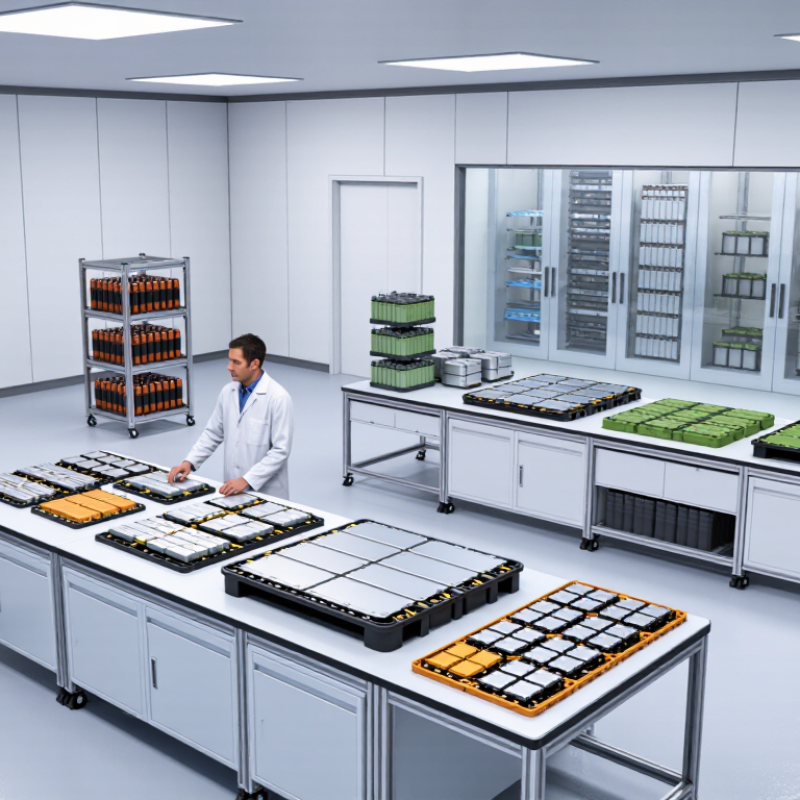
China Top 10 Battery Suppliers How to Choose Reliable Tech?

How China's Battery Supplier Landscape Is Organized

China’s battery supplier landscape is a chain, not a single market. It runs from mineral processing and active materials to cell manufacturing, pack assembly, and battery management systems. The International Energy Agency’s 2022 report, Global Supply Chains of EV Batteries, estimated that China held about 75% of global lithium-ion cell manufacturing capacity, alongside roughly 70% of cathode material capacity and 85% of anode material capacity. Capacity is not the same as actual output. Still, these figures show why many suppliers cluster around Chinese material and cell-production hubs.

For buyers, the practical divisions are chemistry, product format, and application. A supplier focused on cylindrical cells may not suit a project designed around prismatic cells. Nor does a strong cell specification guarantee a reliable finished pack. Ask who controls cell sourcing, testing, thermal design, and traceability. Request dated test records and batch-level quality data, not just a polished specification sheet. IEA data also has limits: broad national shares cannot verify one factory’s performance. That detail matters. Supplier audits can reveal whether incoming materials, production checks, and change approvals are documented consistently. Some smaller suppliers may be capable, but their records can be less complete. That deserves a closer look, not an automatic rejection.

Who Are China's Leading Battery Suppliers?

China’s leading battery suppliers are not one uniform group. The market includes large cell manufacturers, specialist pack makers, and firms serving electric vehicles, energy storage, and consumer devices. Their strengths differ: one may offer high-volume lithium-ion cells, while another builds rugged packs with custom wiring and thermal controls. For buyers, the useful question is not simply who is biggest, but who can document performance for the intended duty cycle. Details matter. Ask for cell chemistry, usable capacity, cycle-life test conditions, and traceable production records. A datasheet alone is not proof.

Reliable suppliers should explain how they control incoming materials, cell matching, welding, and end-of-line testing. Request sample test reports and clarify warranty exclusions, production lead times, and how defects are handled.

For storage projects, inspect temperature limits and protection settings; for mobile equipment, check vibration resistance and connector fit. Factory audits or independent testing can help verify claims, though they add time and cost.

Price comparisons are easy. Verification is harder. Some suppliers may look capable on paper, yet communication during a small pilot order reveals more than a polished presentation. I would compare several qualified factories against the same written specification before committing to volume.

What Battery Technologies and Applications Do They Cover?

Battery suppliers in China work across several chemistries, each suited to different operating needs. Lithium iron phosphate cells are often selected for long cycle life and thermal stability in buses and stationary storage. Nickel-rich lithium-ion cells can provide higher energy density for passenger vehicles and compact equipment, but need careful temperature control and pack design. Sodium-ion batteries are emerging for some storage applications, though availability and performance differ by supplier. Solid-state batteries remain under development, not a routine choice for most projects. Details matter.

Applications also shape the battery design. A home storage system may prioritize dependable daily cycling, while a delivery vehicle needs a compact pack that handles frequent charging. Telecom backup systems may sit unused for long periods, so standby performance matters. Industrial equipment can face vibration, dust, and demanding shift schedules. One specification cannot fit every use.

Compare cell chemistry, usable capacity, cycle-life test conditions, and battery-management features. Ask how performance changes in cold weather or after repeated fast charging. Request clear test reports and traceable quality records, then check whether the supplier can support sample evaluation and production consistency. A polished datasheet is useful, but it is not proof by itself. I would treat unusually broad performance claims cautiously; real results depend on the pack, operating conditions, and maintenance.

How to Verify a Supplier's Reliability and Quality

A supplier’s polished website is not proof of dependable batteries. Ask for recent test reports tied to the exact cell, pack, and configuration you plan to buy. Check report dates, test conditions, sample size, and issuing laboratory. A capacity result without temperature or discharge-rate details tells little. Ask to inspect a production sample. Small details matter.

During a factory or remote audit, compare written procedures with what operators actually do. Follow one batch from incoming-cell records to pack serial number, then review inspection logs and rejected-unit handling. Verify quality certificates directly with the issuing body, including their scope and expiry. For lithium-ion products, request applicable safety and transport test evidence, not a certificate image alone. Conditions vary.

Run independent incoming checks on pilot units: measure voltage, capacity, and internal resistance, then inspect welds, insulation, labels, and battery-management behavior. Agree in writing on acceptance limits, change notifications, warranty response, and corrective-action timelines. Ask how the supplier investigates a failed batch. A credible answer should include records, responsible staff, and dates. No supplier is flawless; an unexplained mismatch between a sample and production deserves a pause, even when the price is attractive.

How to Compare Suppliers and Choose the Right Technology

Choosing among battery suppliers starts with matching technology to the job, not chasing the highest headline capacity. A warehouse forklift, home backup system, and portable medical device face different loads, temperatures, and duty cycles. Ask suppliers for cell chemistry, usable capacity, cycle-life test conditions, and thermal-management details. Numbers need context. A cycle-life figure measured at gentle temperatures may not predict performance in a hot equipment room.

Compare suppliers using the same checklist and request dated test reports, sample performance data, and clear explanations of quality controls. Check whether capacity and safety results cover the complete battery pack, not only individual cells. Ask how incoming cells are inspected, how production batches are traced, and who handles field failures.

Small details matter. A neat spreadsheet cannot replace a sample tested under your own charging schedule and peak load. Compare warranty exclusions, delivery consistency, spare-part availability, and technical response times, too.

One uncomfortable point: supplier answers can sound precise while leaving test assumptions unclear. Record unanswered questions, then ask for written clarification before placing an order. The best fit is the supplier whose evidence matches your operating conditions and whose limits are stated plainly.

FAQS

What types of battery suppliers operate in China?

The market includes cell manufacturers, specialist pack makers, and suppliers for vehicles, storage, and consumer devices. Their strengths differ.

How should I choose a supplier?

Match the supplier’s technology to your equipment and operating conditions. A forklift, backup system, and portable device need different performance.

Which battery details should I request?

Ask for chemistry, usable capacity, cycle-life test conditions, and thermal-management details. Numbers need context.

Does a datasheet prove a battery’s performance?

No. A datasheet can look convincing. It still isn’t proof. Request dated test reports and sample results.

What quality controls should suppliers explain?

Ask how they inspect incoming cells, match cells, manage welding, and test finished packs. Request traceable production records.

Should I test a sample before ordering?

Yes. Test it with your charging schedule and peak load. A small pilot can reveal communication problems, too.

What should I check for a storage system?

Review temperature limits and protection settings. Confirm the test conditions reflect the equipment room.

Which commercial details deserve attention?

Compare warranty exclusions, lead times, delivery consistency, spare parts, and technical response times. Record unclear answers.

How can I verify supplier claims?

Factory audits or independent testing may help, but they cost time and money. I may be overvaluing polished reports; operating conditions matter more.

Conclusion

China’s battery supplier landscape includes manufacturers with different levels of specialization, production capacity, and technical expertise. Some focus on large-scale energy storage, while others serve electric mobility, consumer devices, or industrial applications. Rather than relying on supplier rankings alone, buyers should identify which capabilities and battery technologies match their product requirements, operating conditions, expected service life, and budget.

How To Choose Reliable Battery Technology starts with checking a supplier’s quality-control processes, testing records, production consistency, and ability to provide clear technical documentation. Buyers can also assess manufacturing capacity, communication, after-sales support, and experience with similar applications. Comparing suppliers on the same criteria makes it easier to weigh performance, safety features, cost, and delivery expectations. A careful evaluation helps buyers select both a dependable supplier and a battery solution suited to their intended use.

Henry

Henry

Henry is a dedicated marketing professional with a profound expertise in the company's offerings. With years of experience in the industry, he possesses an impressive understanding of the market dynamics and consumer behaviors that drive success. Henry is committed to sharing his insights through......